Publication
Limen: Jurnal Agama dan Kebudayaan Journal does not charge any submission or processing fees for every article received and published. Instead of it Limen give reward for article published.
Limen: Jurnal Agama dan Kebudayaan is a peer-reviewed journal. This statement clarifies ethical behaviour of all parties involved in the act of publishing an article in this journal, including the author, the chief editor, the Editorial Board, the peer-reviewer and the publisher (Sekolah Tinggi Filsafat Teologi Fajar Timur).
Ethical Guideline for Journal Publication
The publication of an article in a peer-reviewed Limen: Jurnal Agama dan Kebudayaan journal is an essential building block in the development of a coherent and respected network of knowledge. It is a direct reflection of the quality of the work of the authors and the institutions that support them. Peer-reviewed articles support and embody the scientific method. It is therefore important to agree upon standards of expected ethical behavior for all parties involved in the act of publishing: the author, the journal editor, the peer reviewer, the publisher and the society.
Sekolah Tinggi Filsafat Teologi Fajar Timur as publisher of Limen: Jurnal Agama dan Kebudayaan takes its duties of guardianship over all stages of publishing extremely seriously and we recognize our ethical and other responsibilities. We are committed to ensuring that advertising, reprint or other commercial revenue has no impact or influence on editorial decisions. In addition, Sekolah Tinggi Filsafat Teologi Fajar Timur and Editorial Board will assist in communications with other journals and/or publishers where this is useful and necessary.
Publication decisions
The editor of the Limen: Jurnal Agama dan Kebudayaan is responsible for deciding which of the articles submitted to the journal should be published. The validation of the work in question and its importance to researchers and readers must always drive such decisions. The editors may be guided by the policies of the journal's editorial board and constrained by such legal requirements as shall then be in force regarding libel, copyright infringement and plagiarism. The editors may confer with other editors or reviewers in making this decision.
Fair play
An editor at any time evaluate manuscripts for their intellectual content without regard to race, gender, sexual orientation, religious belief, ethnic origin, citizenship, or political philosophy of the authors.
Confidentiality
The editor and any editorial staff must not disclose any information about a submitted manuscript to anyone other than the corresponding author, reviewers, potential reviewers, other editorial advisers, and the publisher, as appropriate.
Disclosure and conflicts of interest
Unpublished materials disclosed in a submitted manuscript must not be used in an editor's own research without the express written consent of the author.
DUTIES OF EDITORS
Publication Decisions
The editor is responsible for deciding which of the articles submitted to the journal should be published. The editor may be guided by the policies of the journal's editorial board and constrained by such legal requirements as shall then be in force regarding libel, copyright infringement and plagiarism. The editor may confer with other editors or reviewers in making this decision.
Fair Play
An editor at any time evaluate manuscripts for their intellectual content without regard to race, gender, sexual orientation, religious belief, ethnic origin, citizenship, or political philosophy of the authors.
Confidentiality
The editor and any editorial staff must not disclose any information about a submitted manuscript to anyone other than the corresponding author, reviewers, potential reviewers, other editorial advisers, and the publisher, as appropriate.
Disclosure and Conflicts of Interest
Unpublished materials disclosed in a submitted manuscript must not be used in an editor's own research without the express written consent of the author.
DUTIES OF REVIEWERS
Contribution to Editorial Decisions
Peer review assists the editor in making editorial decisions and through the editorial communications with the author may also assist the author in improving the paper.
Promptness
Any selected referee who feels unqualified to review the research reported in a manuscript or knows that its prompt review will be impossible should notify the editor and excuse himself from the review process.
Confidentiality
Any manuscripts received for review must be treated as confidential documents. They must not be shown to or discussed with others except as authorized by the editor.
Standards of Objectivity
Reviews should be conducted objectively. Personal criticism of the author is inappropriate. Referees should express their views clearly with supporting arguments.
Acknowledgement of Sources
Reviewers should identify relevant published work that has not been cited by the authors. Any statement that an observation, derivation, or argument had been previously reported should be accompanied by the relevant citation. A reviewer should also call to the editor's attention any substantial similarity or overlap between the manuscript under consideration and any other published paper of which they have personal knowledge.
Disclosure and Conflict of Interest
Privileged information or ideas obtained through peer review must be kept confidential and not used for personal advantage. Reviewers should not consider manuscripts in which they have conflicts of interest resulting from competitive, collaborative, or other relationships or connections with any of the authors, companies, or institutions connected to the papers.
DUTIES OF AUTHORS
Reporting Standards
Authors of reports of original research should present an accurate account of the work performed as well as an objective discussion of its significance. Underlying data should be represented accurately in the paper. A paper should contain sufficient detail and references to permit others to replicate the work. Fraudulent or knowingly inaccurate statements constitute unethical behavior and are unacceptable.
Originality and Plagiarism
The authors should ensure that they have written entirely original works, and if the authors have used the work and/or words of others that this has been appropriately cited or quoted.
Multiple, Redundant, or Concurrent Publication
An author should not in general publish manuscripts describing essentially the same research in more than one journal or primary publication. Submitting the same manuscript to more than one journal concurrently constitutes unethical publishing behaviour and is unacceptable.
Acknowledgement of Sources
Proper acknowledgment of the work of others must always be given. Authors should cite publications that have been influential in determining the nature of the reported work.
Authorship of the Paper
Authorship should be limited to those who have made a significant contribution to the conception, design, execution, or interpretation of the reported study. All those who have made significant contributions should be listed as co-authors. Where there are others who have participated in certain substantive aspects of the research project, they should be acknowledged or listed as contributors.
The corresponding author should ensure that all appropriate co-authors and no inappropriate co-authors are included on the paper, and that all co-authors have seen and approved the final version of the paper and have agreed to its submission for publication.
Disclosure and Conflicts of Interest
All authors should disclose in their manuscript any financial or other substantive conflict of interest that might be construed to influence the results or interpretation of their manuscript. All sources of financial support for the project should be disclosed.
Fundamental Errors in Published Works
When an author discovers a significant error or inaccuracy in his/her own published work, it is the author’s obligation to promptly notify the journal editor or publisher and cooperate with the editor to retract or correct the paper.
Focus and Scope
The scope of this journal allows for research results in philosophy, anthropology (in Papua), ethics, (inter-) religious studies, (catholic) theology All these will be elaborated in Papuan perspective.
Aims
The aim of this Journal is to promote a righteous approach to exploration, analysis, and research on philosophy, humanities, culture and anthropology, phenomenology, ethics, religious studies, philosophy of religion, and theology, especially catholic theology in the context of Papua Culture and society.
Peer Review Process
The review process is as follows.
(1) Author submits article;
(2) Editorial Office assesses article's requirements;
(3) Editor-in-Chief appraises article;
(4) Editor-in-Chief assigns an Associate Editor;
(5) Invitation to Reviewer;
(6) Reviewer's Response to Invitation;
(7) Review is conducted;
(8) Editor-in-Chief evaluates the review;
(9) Decision is communicated to author.
The acceptance or rejection of articles will be decided by the Editor-in-Chief based on the review by the reviewer. Author whose article is rejected will be informed with the reasons of the rejection.
Author Guidelines
The manuscripts
The manuscript should be an original research paper which sufficiently contributes novelty to Study of Religion (Catholic and common) and Culture in Papua, as suggested in aim and scope of Limen journal. The submission has not been previously published, nor is it before another journal for consideration (or an explanation has been provided in Comments to the Editor). Authors are requested to submit their papers electronically by using the Limen: Jurnal Filsafat dan Kebudayaan Journal online submission procedure. The corresponding author should also provide statement that the manuscript is not concurrently being under consideration for publication elsewhere. The Editors will ignore submissions that do not follow these procedures.
Structure of the manuscripts
- Title.The title should be clear and informative
- Author's names and institutions. The author's names should be accompanied by the author's institutions and email addresses, without any academic title. For a joint paper, one of the authors should be notified as the corresponding author.
1. Abstract, keywords.. The abstract should be less than 150 words. Please provide the abstract in both English and Indonesian versions. The key words should be of 3 to 5 words or phrases. Please provide at least one Limen: Jurnal Filsafat dan Kebudayaan Journal classification number that suits your manuscript. abstrak sekitar 150 kata dan beberapa kata kunci. Bila artikel berbahasa Indonesia, abstraknya dalam bahasa Inggris. Sebaliknya, bila artikel berbahasa asing, abstraknya dalam bahasa Indonesia.
- Introduction.This section explains the background of the study, a review on the previous researches in the area, and aims of the manuscripts. Importantly it should also show the significance and novelty of the research.
- Methods.This section describes the appropriate tools of analysis along with the data and their sources.
- Results and Discussion.This section explains the results of the study. It should be presented clearly and concisely. Author(s) should explore the novelty or the contribution of the work to the economics literature.
- Conclusion.This section concludes and provides policy implications, if any, of the study. The conclusion(s) should be at the same order with ones discussed in the body of the manuscript.
- Acknowledgments (Optional)
- References.This section lists only the papers, books, or other types of publications referred to in the body of the manuscript.
General Writing Format
- The manuscript is prepared in a A4 paper, single-sided, and single line spacing format as in the template.
- The research article should contain title, author’s name(s), affiliation/institution, and postal address, abstract, keywords, introduction, method, results and discussion, conclusion and suggestion, and references.
- The manuscript should be between long. 5000 – 7000 words
- Word or terms that are not Indoensian word and term should be written in italic.
- The top margins are 3 cm and bottom margins are 2.5 cm
- The title is written using capital letters only at first word or special name (example: location name), font size 20 pt, center position.
- Sub titles are written using capital letters only at first word or special name and 12 pt font size
- Sub of sub titles, if any, are written using capital letters only at first word or special name. They should be started from the left margin.
- Sub of sub of sub titles, if any, are written using capital letters only at the beginning of each word except for connecting words. They should be started from the left margin.
- References should be those of the last ten years’ publication (>80%), except for key references (80%). Referring to any textbook should be minimized (<20%).
Tables and Figures
Tables and figures should be presented as follows:
- The name of tables and figures should follow a numbering system. The title of the tables and figures are placed at the top and the bottom respectively.
- The tables and figures should provide the source of information, if any, at the bottom.
- Any table should contain only heading and contents. The table contains row lines only without column lines. Note(s) and source(s) should be included underneath the table where appropriate.
Citation
Citation for reference should be written in the text body using the family name and years of publication. Example:
- Hill (2001) suggests that the objective of depreciation is ....
- Inflation targeting would be sufficient (McCain, 1982).
- The definition of contagion is ... (Wagner, 1976; Rhonda 2009).
- If needed to add page number, just add it after year (Baal, 1987: 15).
- The Authors are recommended to use Mendeley Reference software.
Citation that gives more explanation should be written in footnote.
References
The manuscript is expected to involve approximately 10-15 primary and up-to-date references to assert high quality contributions to the knowledge development. Citations and references must strictly follow the APA (American Psychological Association) style. References should include only works that are cited within the text of the manuscript. Consulting the APA style manual (http://www.apastyle.org/pubmanual.html) is strongly recommended for completing manuscript submissions.
References should appear as:
Author, A. A. (2005). Title of work. Location/City, State: Publisher. (Book with one author)
Author, A. A., & Author, B. B. (2005). Title of work. Location/City, State: Publisher. (Book with two authors)
Author, A. A., Author, B. B., & Author, C. C. (2005). Title of work. Location/City, State: Publisher. (Book with more than two authors)
Ruchba, S. M., & Suhada, F. (2015). The impact of regional autonomy and monetary crisis on economic growth in Yogyakarta. Economic Journal of Emerging Markets, 7 (3), 60-68. (Journal article)
Kuncoro, H. (in press). Does the sustainable fiscal policy foster its credibility? Economic Journal of Emerging Markets. (A publication in press)
Gregoriou, G. N. (Ed.). (2009). Emerging Markets: Performance, Analysis, and Innovation. Florida, USA: CRC Press. (Edited book)
Courant, P. N., Gramlich, E. M., & Rubinfeld, D. L. (1979). The stimulative effects of intergovernmental grants: or why money sticks where it hits. In P. Mieszkowski, & W. H. Oakland (Ed.), Fiscal Federalism and Grants-in-Aid (pp. 5-21). Washington, DC: The Urban Institute. (Chapter in an edited book)
Prasetyo, P. E., Sudarma, K., & Sulaha, A.S. (2014). Economic policy impact on competitiveness and efficiency of textile industry in central Java. Economic Journal of Emerging Markets, 6 (2), 85-95. Retrieved August 23, 2016, from http://journal.uii.ac.id/index.php/JEP/issue/view/417 (Web site)
Mosquera, C. M. R. (2009). Essays on Economic Growth, Financial Integration and Exchange Rates. Unpublished doctoral dissertation, University of Pittsburgh, Pennsylvania. (Unpublished doctoral dissertation or master’s thesis)
Altinbas, H., & Biskin, O.T. (2015). Selecting macroeconomic influences on stock markets by using feature selection algorithms. In E. Hromada (Ed.), IISES 3rd and 4th Economics and Finance Conference: Vol. 30. Procedia Economics and Finance (pp. 22-29). London: International Institute of Social and Economic Sciences. (Published proceedings)
Lagos, Ricardo. (2009, October). Asset Prices, Liquidity, and Monetary Policy in an Exchange Economy. Paper presented at the Annual Economic Policy Conference of the FRB of St. Louis: "Debt, Financial Markets, and Monetary Policy", Federal Reserve Bank of St. Louis, US. (A presented paper)
Manuscript Template. Manuscript should be prepared according to the following MS Word template (click here)
submission
How to send the manuscript
- The manuscript in microsoft word (.doc) should be sent to the editor by clicking Register tab on our Website 2 months before publish (April and October)
- A brief bio that contains full name, academic title, institution, telephone, mobile number, and others should be written in the fields of data when registering online in the website submission.
3. The text adheres to the stylistic and bibliographic requirements outlined in the Author Guidelines, which is found in About the Journal.
4. Editors and reviewer could edit article without changing its content and meaning intended by author.
5. Authors submitting articles should read the Review Process that will be applied to them.
6. Publication of article will be informed to authors by e-mail on OJS.
Archiving
This journal utilizes the LOCKSS system to create a distributed archiving system among participating libraries and permits those libraries to create permanent archives of the journal for purposes of preservation and restoration.
Open Access Policy
This journal provides immediate open access to its content on the principle that making research freely available to the public supports a greater global exchange of knowledge.
Copyright Notice
Limen: Jurnal Filsafat dan Kebudayaan applies the Creative Commons Attribution (CC BY) license to articles and other works we publish. If you submit your paper for publication by Limen: Jurnal Filsafat dan Kebudayaan, you agree to have the CC BY license applied to your work. Under this Open Access license, you as the author agree that anyone can reuse your article in whole or part for any purpose, for free, even for commercial purposes.
Users may share (copy and redistribute the material in any medium or format) and adapt (remix, transform, and build upon the material) for any purpose, even commercially as long as they give appropriate credit, provide a link to the license, and indicate if changes were made. They may do so in any reasonable manner, but not in any way that suggests the licensor endorses them or their use. This facilitates freedom in re-use and also ensures that Limen: Jurnal Filsafat dan Kebudayaan content can be disseminated without barriers for the needs of wider research fields.
If your article contains content such as photos, images, figures, and tables that you do not own, we will require you to provide us with proof that the owner of that content (a) has given you written permission to use it, and (b) has approved of the CC BY license being applied to their content. Please do not include any content in your Limen: Jurnal Filsafat dan Kebudayaan article which you do not have rights to use, and always give proper attribution.
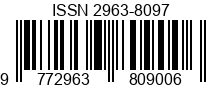
Limen, Jurnal Agama dan Kebudayaan Online ISSN 2963-8097
Limen, Jurnal Agama dan Kebudayaan is published twice a year (April and October) by Sekolah Tinggi Filsafat Teologi Fajar Timur
Limen (Latin word means: limen or threshold; Indonesian: ambang batas gawang pintu, garis batas) refers to the term ‘liminal’ in anthropology to indicate the moments of life transition regarding phases of human being development to its maturity, its social roles and degrees, or other transitions that impact their life deeply.
Limen invites you to be in threshold and to go beyond the border, and to come in the new phase of your life and to get the new enlightenment.